
There’s a very specific kind of television show that exists solely because executives watched another, better television show succeed and said:
“Can we do that again… but with basketball?”
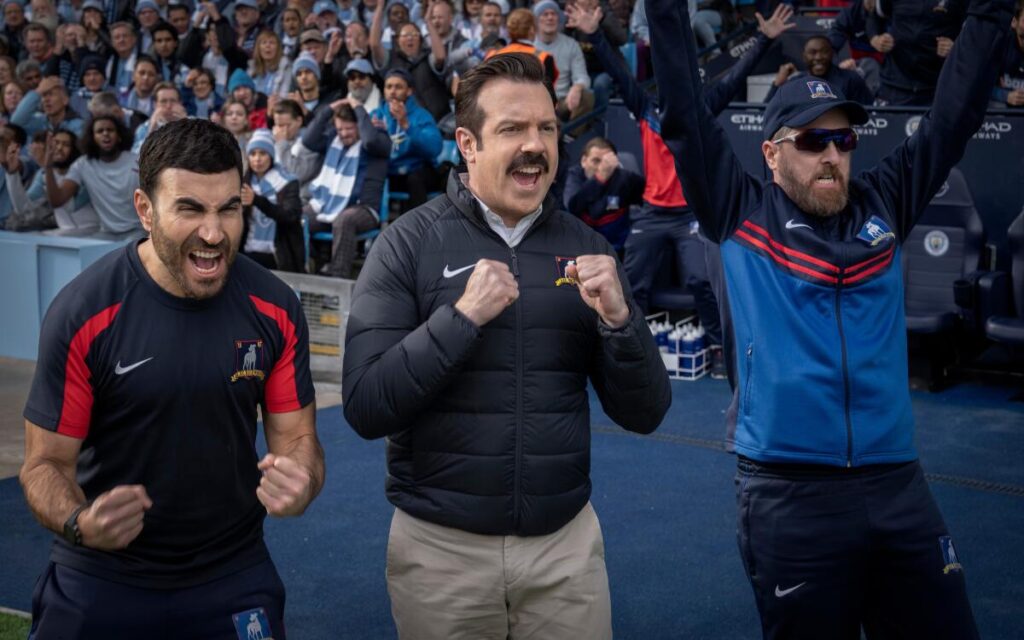
That’s essentially Netflix’s Running Point in a nutshell. It’s a glossy, fast-talking, emotionally prepackaged sports dramedy that desperately wants the heart, charm, and cultural staying power of Ted Lasso, but never quite figures out why Ted Lasso worked in the first place.
And that’s the frustrating thing about Running Point: it isn’t terrible. In fact, parts of it are genuinely entertaining. The cast is likable. The pacing is quick. The production is polished. But the entire experience feels like someone reverse-engineered Ted Lasso by studying Twitter clips and inspirational quote calendars instead of understanding actual character development.
It’s basketball comfort food without any nutritional value.
Ted Lasso
Understood Sports Are About People
The brilliance of Ted Lasso was never soccer.
Most people watching the show couldn’t explain relegation rules if their lives depended on it. The sport was simply the mechanism used to explore vulnerability, leadership, masculinity, loneliness, failure, and emotional growth.
That show worked because every joke, every motivational speech, and every absurd biscuit obsession was grounded in sincerity. The characters evolved. Their pain mattered. Their victories felt earned.
Running Point wants those same emotional highs, but it treats emotional depth like an optional DLC pack. Instead of layered humanity, the show relies on speed. Dialogue flies by at a machine-gun pace as if the writers feared the audience might become emotionally invested if anyone paused longer than three seconds. Characters don’t grow organically. They pivot when the plot needs them to.
Basketball Becomes Background Noise
Which is ironic because basketball should be the easiest sport to make cinematic.
The NBA ecosystem is already built on ego, celebrity culture, billion-dollar branding, locker room drama, family dynasties, and media chaos. It’s practically designed for prestige television.
Yet Running Point somehow makes professional basketball feel oddly weightless.
Compare that to how Ted Lasso used AFC Richmond. The club itself felt alive. Wins and losses carried emotional consequences because the audience understood what the team meant to the characters.
In Running Point, the basketball organization often feels like set decoration for workplace comedy.
Games happen. Crises emerge. PR disasters explode. But very little of it carries emotional gravity because the show rarely slows down long enough to let moments breathe.
Everything feels algorithmically optimized for binge-watching rather than storytelling
Which is ironic because basketball should be the easiest sport to make cinematic.
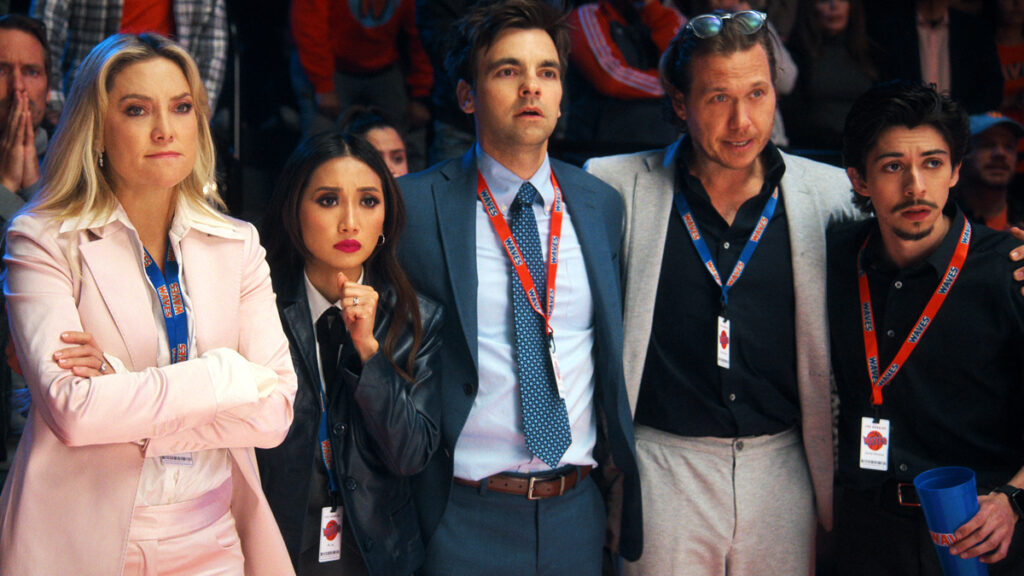
The NBA ecosystem is already built on ego, celebrity culture, billion-dollar branding, locker room drama, family dynasties, and media chaos. It’s practically designed for prestige television.
Yet Running Point somehow makes professional basketball feel oddly weightless.
Compare that to how Ted Lasso used AFC Richmond. The club itself felt alive. Wins and losses carried emotional consequences because the audience understood what the team meant to the characters.
In Running Point, the basketball organization often feels like set decoration for workplace comedy.
Games happen. Crises emerge. PR disasters explode. But very little of it carries emotional gravity because the show rarely slows down long enough to let moments breathe.
Everything feels algorithmically optimized for binge-watching rather than storytelling.
The Problem With “Quirky” Characters
Modern streaming television has developed an addiction to “quirky competence.”
Every character needs:
- a sarcastic one-liner
- emotional trauma
- designer clothing
- rapid-fire dialogue
- hidden vulnerability
- one socially awkward habit
Running Point checks every box with the efficiency of an HR onboarding seminar.
The issue is that Ted Lasso succeeded because its characters didn’t initially feel engineered for social media fandom. They felt messy. Sometimes uncomfortable. Occasionally unlikeable.
Jason Sudeikis played Ted with genuine warmth and sadness underneath the optimism. The performance carried emotional exhaustion beneath the mustache.
By comparison, many of Running Point’s characters feel like they were assembled by committee after executives studied engagement metrics.
Everybody is witty.
Nobody sounds human.
The “Feel Good” Formula Is Starting to Rot
There was a period after Ted Lasso exploded where Hollywood rediscovered optimism. Suddenly every streaming service wanted uplifting ensemble shows about empathy and personal growth.
In theory, that’s great.
In practice, many newer shows confuse positivity with depth.
Ted Lasso earned its emotional moments through conflict and discomfort. Panic attacks weren’t treated like quirky plot twists. Divorce wasn’t reduced to clever banter. Loneliness lingered.
Running Point often feels afraid of genuine discomfort. It wants emotional credibility without risking tonal heaviness. The result is a strangely sanitized version of sports drama where every conflict feels safely pre-approved by Netflix’s brand department.
It’s the television equivalent of motivational wall art in a corporate conference room.
The Netflix Problem: Content vs Identity
This is where Netflix’s fingerprints become impossible to ignore.
Netflix has mastered the art of producing shows that are instantly consumable and immediately forgettable. Running Point falls squarely into that category.
You can absolutely burn through six episodes in a weekend.
You will also struggle to remember specific scenes two weeks later.
Meanwhile, Ted Lasso created cultural moments:
- the dart scene
- “Believe”
- Roy Kent’s vulnerability
- Jamie Tartt’s growth
- Ted’s panic attacks
- Rebecca’s emotional evolution
Those moments stuck because they were tied to character transformation.
Running Point has jokes.
Ted Lasso had emotional memory.
That’s the difference.
To Be Fair: Running Point Is Still Watchable
Here’s the annoying part: despite all these criticisms, Running Point remains pretty entertaining.
The pacing is efficient. The cast has chemistry. There are flashes where the show hints at something smarter and more emotionally grounded underneath all the polished streaming-service gloss.
And honestly, not every sports comedy needs to become a life-affirming meditation on humanity.
Sometimes people just want attractive people arguing about basketball while emotional indie music plays softly in the background.
That audience will probably love this show.
But if you walk into Running Point expecting the emotional authenticity of Ted Lasso, you’ll quickly realize you’re watching a series that imitates the shape of heartfelt storytelling without fully committing to the substance.
Final Verdict
Running Point feels like a show created by people who deeply understood why Ted Lasso became profitable, but only partially understood why it became beloved.
It copies the warmth, the optimism, the sports-world backdrop, and the ensemble dynamics.
But it misses the soul. And in sports storytelling, soul is the whole game.
Ted Lasso made audiences believe kindness could survive modern cynicism.
Running Point mostly makes audiences want to check their phones between episodes.
Leave a Reply