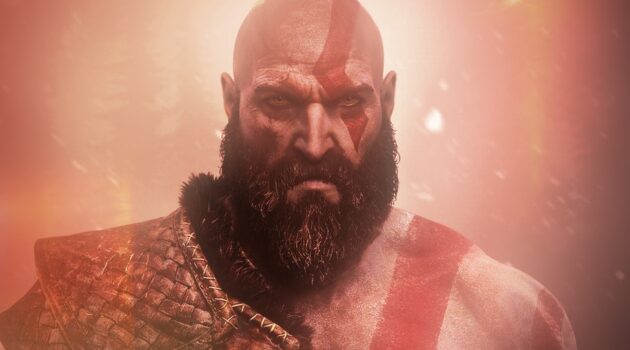
Every now and then, gaming reminds you why you started in the first place.
Not for battle passes, or skins. Not for some seasonal grind that feels like a second job you didn’t apply for.
But for story.
Enter God of War (2018) and God of War Ragnarök—two games that didn’t just show up… they showed off. Not with gimmicks, but with something the industry’s been slowly misplacing: heart.
A Different Kind of Power
Let’s be honest—Kratos isn’t exactly known for subtlety.
The guy used to solve problems by screaming and removing limbs. Efficient? Sure. Nuanced? Not so much.
But then something changed.
Suddenly, it wasn’t just about gods and chaos—it was about a father and a son. About regret. About trying to be better when your past is basically a highlight reel of bad decisions.
And somehow, this mountain of rage became… relatable.
That’s the power of story-driven games. They take something absurd—like fighting Norse gods—and ground it in something real. Something human.
Why Story Still Hits Different
You can have the best graphics in the world. The smoothest combat. The most addictive progression loop.
But if there’s no story?
You’ll forget it in a week.
Story is what sticks. It’s what makes you pause the game and just sit there for a second. It’s what turns a good game into something you actually remember years later.
God of War didn’t need to reinvent gameplay to matter—it doubled down on narrative.
– Conversations that felt natural
– Characters that actually evolved
– Moments that weren’t afraid to slow down
It trusted players to care—and that’s rare now.
The Industry Problem (Yeah, We’re Going There)
Most games today are terrified of stillness.
Everything has to be faster, louder, more “engaging.” There’s always a marker on the map, a reward to chase, a timer counting down.
God forbid you just… exist in the world for a minute.
But God of War said, “Nah.”
It let scenes breathe, characters talk without explosions every five seconds, it gave weight to silence—something most modern games wouldn’t recognize if it hit them in the face. And somehow, that made it more intense than any boss fight.
A Little Humor, Because We Need It
Let’s not pretend the game isn’t still ridiculous in the best way.
You’re literally carrying around the head of a talking god, rowing a boat while getting life advice, and somehow it all feels completely normal after an hour.
Kratos—this absolute unit of a man—grunts out emotional growth like it physically pains him. Which, to be fair, it probably does.
“Boy.”
That’s it. That’s the parenting style.
And yet… it works.
Why It Matters More Than Ever
Games like God of War prove something important:
Players want story.
Not everyone—but enough of us to matter.
We want characters we care about. Worlds that feel alive. Moments that hit harder than a kill streak or a loot drop.
Because at the end of the day, nobody’s reminiscing about the time they completed a daily challenge.
But they will remember how a story made them feel.
Final Pour
Gaming isn’t lost.
It just gets distracted sometimes.
Buried under monetization systems and endless content loops, it’s easy to forget what made it great in the first place. But then a game like God of War comes along and cuts through all of it—clean, focused, and unapologetically driven by story.
No gimmicks. No shortcuts. Just something real.
And maybe that’s all we’ve been asking for.
Whiskey 7 Seven
Good stories linger. Great ones stay with you. Pour something worthy.
Leave a Reply